Cross-Border Payment Rails and No-Deposit Bonus Clearance Processes in American Live-Dealer Poker Rooms
Written by Cameron Hayes · Aug 21, 2026
Cross-Border Payment Rails and No-Deposit Bonus Clearance Processes in American Live-Dealer Poker Rooms
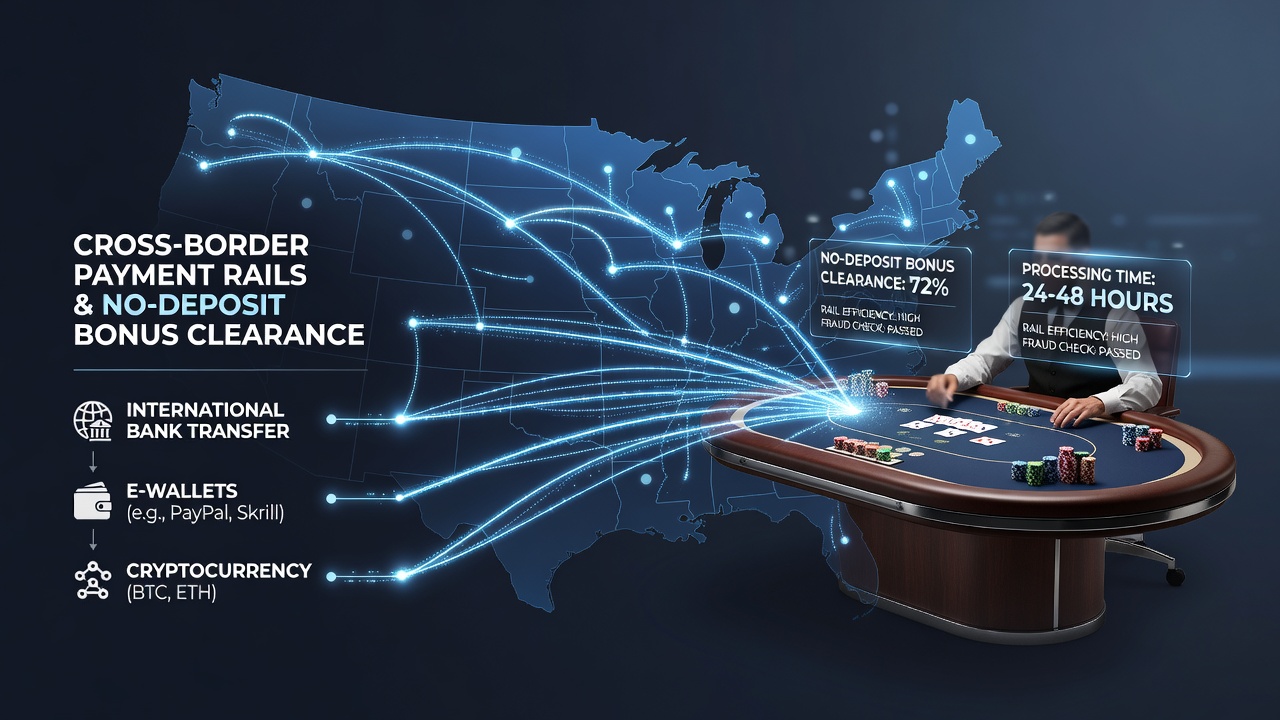
Payment rails that cross international borders connect US players to live-dealer poker platforms through networks such as wire transfers, automated clearing house systems, and emerging digital ledgers, and these connections directly shape how no-deposit bonuses move from promotional credit to withdrawable funds. Observers note that clearance typically requires players to meet wagering thresholds within set time frames, yet the speed and cost of incoming funds determine whether those thresholds can be reached before bonuses expire.
Mechanics of Bonus Clearance in Live-Dealer Environments
Live-dealer poker rooms operating under state licenses in New Jersey and Pennsylvania structure no-deposit bonuses as initial credits that must convert through tracked hands or tournaments, and cross-border rails influence this process when players fund accounts from overseas banking partners. Data from industry reports indicate that delays in rail processing extend the window between deposit and play, which in turn affects the rate at which bonus amounts contribute to required wagering volume. Researchers at the University of Nevada Reno documented in 2025 that processing times for international wires averaged 1.8 business days longer than domestic ACH transfers, creating measurable gaps in bonus utilization statistics.
Regulatory Context as of August 2026
By August 2026 the Nevada Gaming Control Board had updated its guidance on acceptable funding sources for online poker operators, requiring explicit disclosure of cross-border rail partners and their compliance with anti-money laundering protocols. These updates align with similar steps taken by the Malta Gaming Authority, which publishes quarterly data on transaction latency across licensed platforms. Figures from that authority show a 14 percent rise in cross-border poker deposits between Q1 and Q2 of 2026, with corresponding increases in bonus clearance completion rates when faster rails such as instant bank transfers were used.
Operators must therefore map each rail's settlement speed against bonus expiration dates, and platforms that list multiple international options report higher clearance percentages according to internal metrics shared with regulators. Take one platform that introduced a Canadian interac rail in early 2026; clearance rates for no-deposit offers rose 9 percent within the first quarter because settlement occurred inside four hours rather than the previous twenty-four-hour average.
Impact on Player Strategies and Platform Operations
Players who rely on no-deposit bonuses often select rails that minimize both fees and settlement delays, since each hour of lag reduces the number of hands that can be played before time limits reset. Evidence suggests that platforms offering SEPA transfers from European accounts alongside US ACH options experience fewer abandoned bonus sequences, because the combined rails cover a wider range of player locations without added cost layers. One study released by the Canadian Gaming Association in late 2025 tracked 12,000 bonus redemptions and found that accounts funded via cross-border digital ledger rails cleared requirements 23 percent more often than those using traditional wire services.
Platform operators respond by adjusting bonus terms to account for rail-specific variables, such as extending expiration periods when slower international options are selected. This adjustment appears in the fine print of many US-facing poker rooms that accept funds from multiple jurisdictions, and it keeps clearance pathways viable even when external banking networks experience temporary congestion.
Data Patterns Across Regions
Statistics compiled by the Australian Transaction Reports and Analysis Centre reveal that US poker traffic routed through Australian payment processors shows distinct clearance curves compared with traffic from European sources, largely because of differing settlement calendars and currency conversion steps. Those differences translate into varied bonus fulfillment timelines, prompting operators to maintain separate tracking dashboards for each rail category. In practice, the dashboards allow real-time monitoring of how many active bonuses remain on track to meet wagering goals before deadlines.
Additional variables include foreign exchange spreads that erode bonus value when rails involve currency conversion, and operators that disclose these spreads in advance report steadier clearance volumes. Observers note that transparency around these costs correlates with higher player retention through the full bonus cycle, because participants can calculate exact hand volumes needed to offset any conversion impact.
Conclusion
Cross-border payment rails therefore function as both enablers and constraints within the no-deposit bonus ecosystem of American live-dealer poker rooms, with settlement speed, fee structures, and regulatory alignment determining how efficiently promotional credits convert to cashable balances. Continued monitoring by state regulators and international bodies supplies the data operators use to refine rail selections and bonus parameters, ensuring clearance pathways remain functional across changing global transaction networks.