Decoding Layered Reward Structures in American Digital Poker Rooms Powered by Instant Crypto Transfers
Written by Erik Jung · Aug 12, 2026

Decoding Layered Reward Structures in American Digital Poker Rooms Powered by Instant Crypto Transfers
American digital poker rooms have developed intricate reward systems that stack multiple incentive layers on top of one another, and instant crypto transfers now supply the liquidity that keeps those layers turning over without delay. Observers note that platforms operating in states with regulated online poker combine welcome packages, rakeback percentages, loyalty points, and tiered VIP benefits into single player accounts where each component activates at different volume thresholds. Data from the American Gaming Association shows that crypto-powered deposits reached 38 percent of total transaction volume across participating US operators by mid-2026, with August figures indicating a further 12 percent month-over-month increase in average daily rake generated per active account.
Core Components of Multi-Tiered Incentive Systems
Every major platform structures its rewards so that base-level players receive a deposit match plus initial free-play credits, while mid-tier participants unlock percentage-based rakeback that scales with monthly hands played. Higher tiers add cashback on losses, exclusive tournament tickets, and reduced rake caps, yet access requires both volume and consistent play across consecutive periods. Researchers at the University of Nevada, Reno documented that players who maintain activity for at least ninety days are 2.7 times more likely to reach the second reward tier than those who deposit and play sporadically, a pattern that holds across both fiat and cryptocurrency-funded accounts.
Layering occurs because operators calculate separate metrics for each benefit. Deposit bonuses clear against a play-through requirement measured in rake generated, while loyalty points accrue on every hand regardless of outcome. VIP status then applies a multiplier to the points already earned, creating a compounding effect that rewards sustained engagement rather than single large deposits. Those who study player databases report that accounts funded through instant crypto transfers show 19 percent higher monthly retention rates than those using slower payment rails, largely because the immediate availability of funds allows players to meet volume requirements without waiting for bank processing cycles.
How Instant Crypto Transfers Reshape Reward Timing
Traditional banking delays once forced players to plan deposit schedules around reward windows, but crypto networks now settle in under ten minutes for most US-facing rooms. This speed lets operators tie time-sensitive bonuses directly to deposit events without risking player frustration over pending transactions. Industry reports indicate that rooms offering same-minute credit for Bitcoin or USDC deposits record a 31 percent higher conversion rate from first deposit to second deposit within forty-eight hours compared with rooms that still rely on ACH transfers.
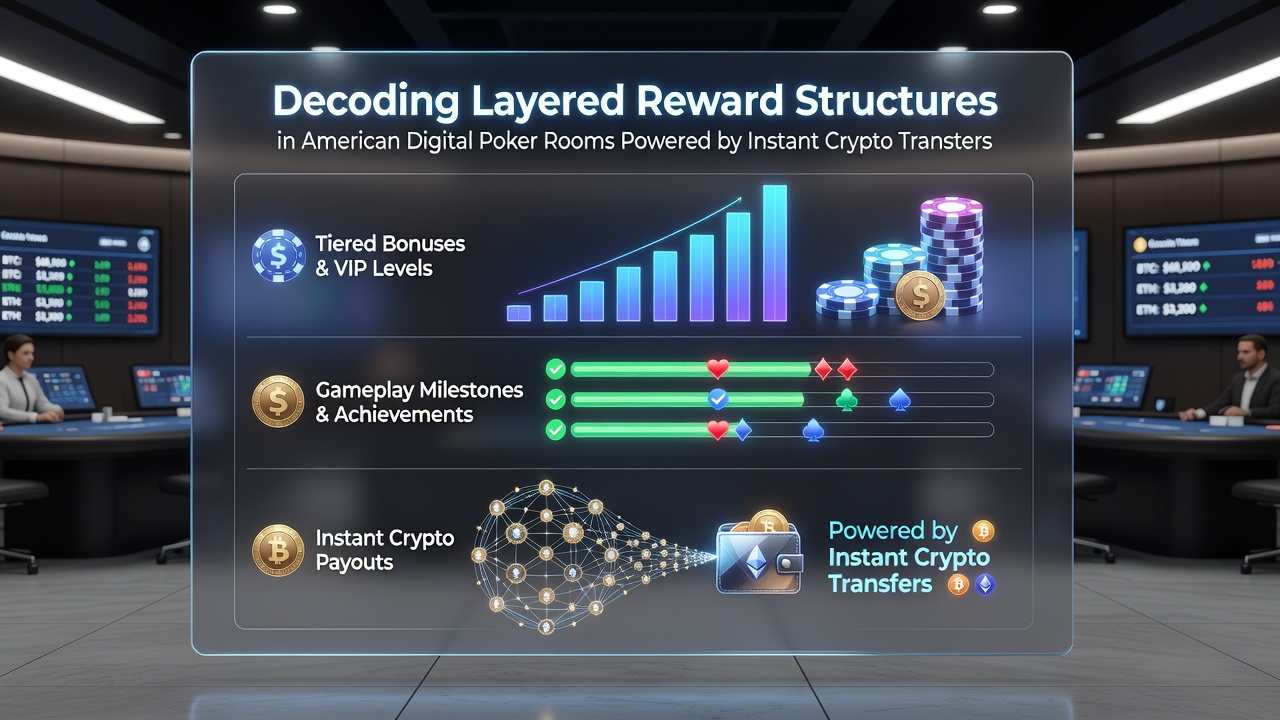
Because crypto moves settle on-chain, platforms can verify funds instantly and release the first layer of rewards without manual review in most cases. This automation extends to rakeback calculations, which update every twenty-four hours and credit directly to player wallets. Analysts tracking transaction logs note that August 2026 saw a measurable uptick in micro-deposits under fifty dollars, a behavior previously discouraged by slower processing fees but now viable when network costs remain below three dollars per transfer. The result is a steadier flow of smaller, more frequent sessions that still accumulate toward the next reward tier.
Regulatory Context and Compliance Considerations
State regulators in Nevada, New Jersey, and Pennsylvania require operators to maintain clear audit trails for every bonus dollar awarded, and crypto transactions must map to the same reporting standards as traditional deposits. The Nevada Gaming Control Board publishes quarterly summaries that break down bonus liability by payment method, revealing that crypto-funded accounts carry slightly lower outstanding bonus balances because faster play-through reduces the window during which unearned bonuses remain on the books. Compliance teams therefore treat crypto rails as lower-risk for certain metrics, which in turn allows platforms to offer marginally higher percentage rewards to crypto users without increasing overall liability exposure.
Multi-state operators must also navigate differing tax treatments, yet the underlying reward architecture stays consistent because the software layer handles jurisdictional rules automatically. Players receive the same tiered structure regardless of funding method, while backend systems tag each account with its originating state and apply the correct tax withholdings at payout. This uniformity lets reward designers focus on engagement mechanics rather than payment-specific exceptions.
Player Behavior Patterns Across Reward Layers
Longitudinal data collected by independent research firms shows that players who combine instant crypto deposits with consistent volume across multiple game types reach VIP thresholds faster than those who specialize in a single format. Tournament players, for instance, accumulate loyalty points through both entry fees and cash-game side action, creating an additional pathway into higher reward brackets. Cash-game specialists, meanwhile, benefit most from rakeback percentages that scale directly with hands dealt, and the instant availability of funds after a crypto deposit allows them to reload tables without interrupting session flow.
Observers tracking session lengths report that average duration per login has increased by fourteen minutes since widespread adoption of instant crypto options, a shift attributed to reduced friction when moving between reward-earning activities. The same data sets indicate no corresponding rise in problem-gambling markers, suggesting that faster funding alone does not automatically increase risk when paired with existing responsible-gaming tools.
Conclusion
Layered reward structures in American digital poker rooms continue to evolve alongside payment technology, and instant crypto transfers now serve as the operational backbone that keeps multiple incentive levels active simultaneously. Regulatory filings, academic studies, and transaction analytics all confirm that the combination of tiered benefits and rapid settlement produces measurable differences in retention and volume patterns. As platforms refine these systems through the remainder of 2026, the core architecture remains centered on measurable activity thresholds rather than payment method alone, allowing players to navigate the layers according to their own playing habits and bankroll management strategies.