Tracing the Hidden Links Between Live Streaming Tech and Shared Strategy Networks in Digital Table Play Communities
Written by Cameron Hayes · Sep 2, 2026
Tracing Technological Synergies in Live Streaming and Strategy Networks for Digital Table Play
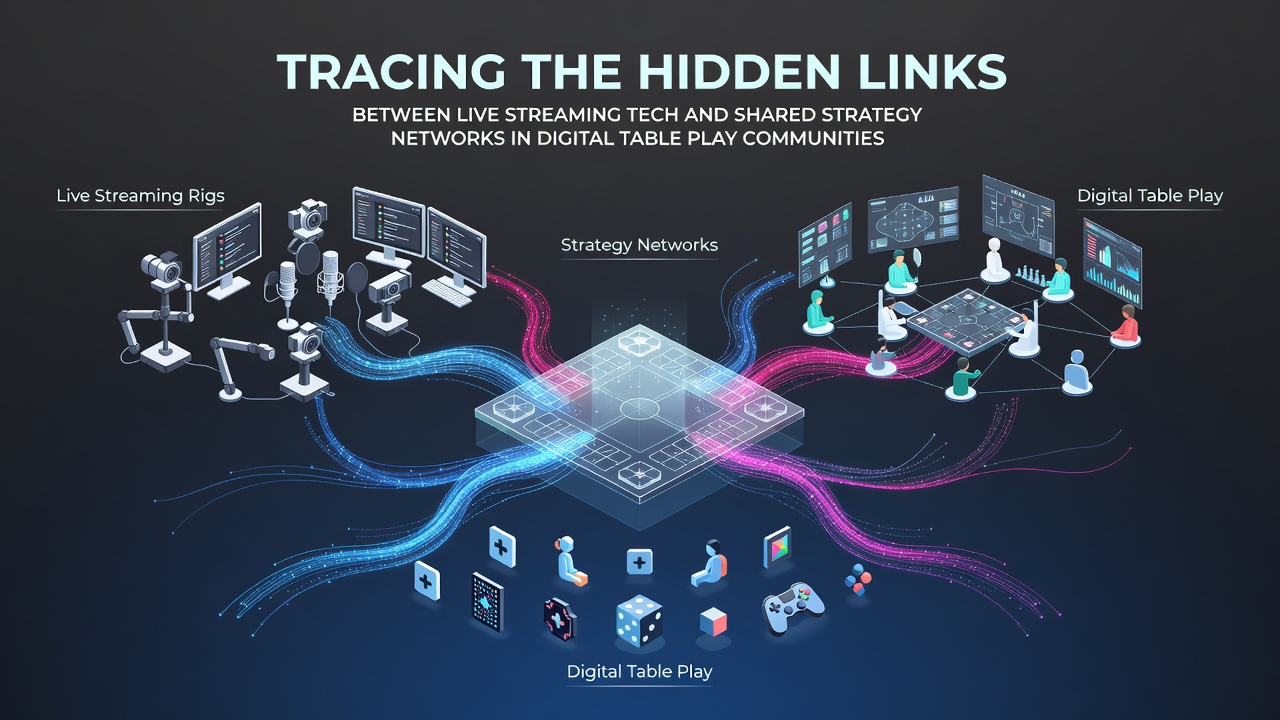
Live streaming platforms now connect directly with collaborative networks that allow participants in digital table play communities to exchange tactics during sessions, and this integration draws from advances in video encoding, real-time data synchronization, and community moderation tools. Developers have refined low-latency protocols such as WebRTC to support simultaneous broadcast and chat functions, which enables groups to review hands or decisions as they unfold. Data from industry reports indicate that participation in these combined systems grew steadily through 2025, with platforms reporting increased session durations when strategy overlays appear alongside streams. Observers note that shared strategy networks often operate through dedicated servers or applications where users upload anonymized play logs, and these logs then feed into live feeds via API connections. The process relies on standardized data formats that convert game states into visual elements like heat maps or probability charts, which appear on screen without disrupting the primary video. Researchers at institutions focused on digital interaction have documented how such linkages reduce the time between observation and application of tactics in group settings. **Core Components of Live Streaming Tech**
Modern live streaming for table play incorporates adaptive bitrate streaming alongside cloud-based rendering, which maintains visual quality across varying connection speeds. Companies behind these systems have incorporated AI-driven scene detection to highlight key moments, such as betting rounds or card reveals, and this feature syncs with external databases maintained by strategy groups. In September 2026, updates to certain open-source streaming libraries introduced enhanced support for multi-view layouts, allowing one screen to display the main game alongside participant discussions from linked networks. These technical elements create pathways for immediate feedback loops. Participants receive notifications when a network member posts an analysis that matches the current stream, and the system pulls relevant threads into a sidebar panel. Figures from technology adoption studies show that communities using these synchronized tools report higher retention rates compared to standalone streaming setups. **Shared Strategy Networks and Their Structure**
Strategy networks function as repositories and discussion hubs where members contribute session data, statistical models, and decision trees. Many rely on distributed ledger elements for version control of shared resources, ensuring contributors retain credit while preventing unauthorized alterations. Integration points with live streams occur through authenticated endpoints that pull selective content without exposing full user profiles. One documented case involved a North American digital table group that linked its internal forum to a popular streaming service, resulting in automated highlights that triggered related threads. This setup drew on protocols developed for interactive media, and similar patterns appear in European and Australian platforms where regulatory frameworks emphasize data portability. External analyses from sources like the Entertainment Software Association highlight how these networks scale through modular plugins that developers customize for specific game variants. 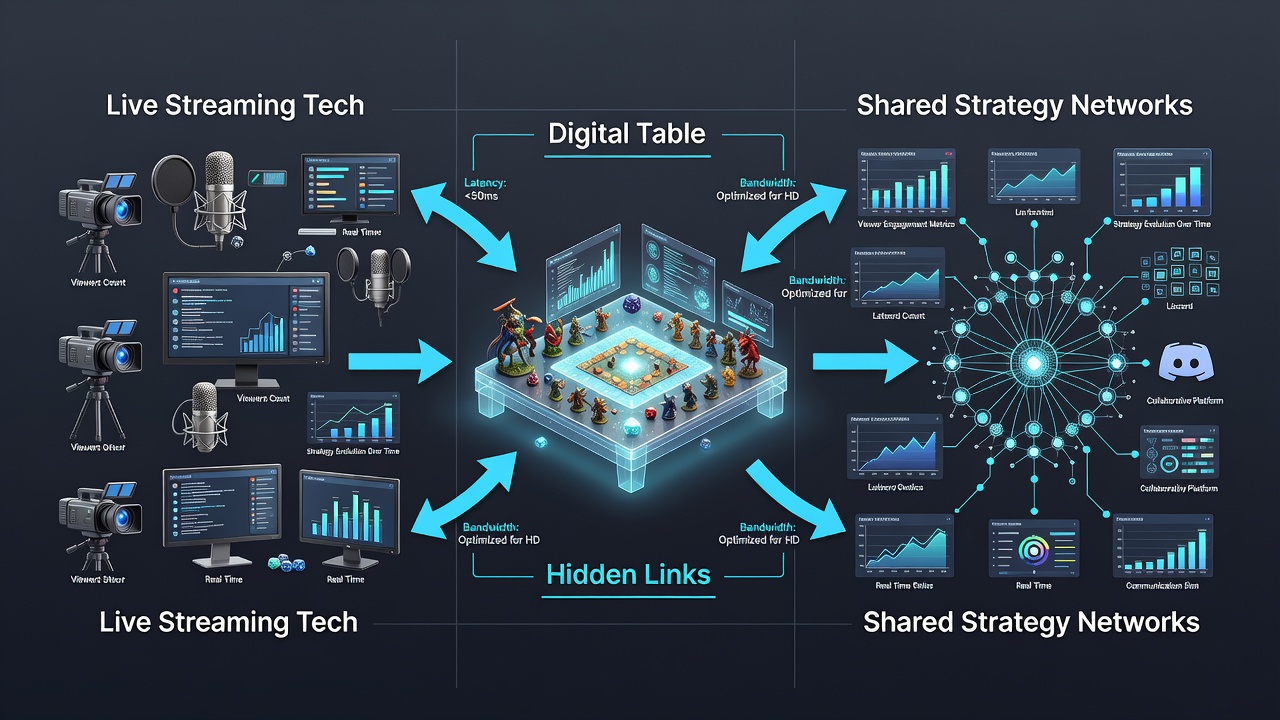 **Interconnections and Data Flow Mechanisms**
The hidden links emerge through middleware layers that translate between video streams and structured data exchanges. These layers handle encryption to protect sensitive play information while permitting public discussion of general patterns. What's interesting is how latency compensation algorithms align timestamps across both systems, so a strategy post appears relevant to the exact moment in a broadcast. Studies from university research centers in Canada have examined these flows, noting that bandwidth allocation often prioritizes strategy data packets during peak community activity. And yet the architecture extends further. Some networks incorporate machine learning models trained on aggregated community inputs, which then generate suggestions displayed as optional overlays on streams. This occurs without direct control over individual play decisions, as the models operate on anonymized datasets. Reports from teh Interactive Games and Entertainment Association in Australia detail similar implementations where cross-platform compatibility testing occurred throughout 2025, paving the way for broader adoption. **Developments Anticipated Around September 2026**
By September 2026, enhancements in edge computing are projected to shorten the gap between stream initiation and strategy network responses. Developers have tested prototypes that embed lightweight analytics engines directly into streaming hardware, reducing reliance on central servers. Those who've studied these trends observe that such changes could expand access for smaller communities operating on regional infrastructure. The reality is that interoperability standards continue to evolve through working groups that include both streaming providers and network operators. These efforts focus on open formats for metadata exchange, which support features like synchronized replay with annotated strategy notes. Evidence from pilot programs suggests measurable improvements in community engagement metrics when these standards receive consistent implementation. **Conclusion**
The connections between live streaming technology and shared strategy networks rest on established protocols for data exchange, real-time rendering, and community moderation. As systems advance through incremental updates, participants in digital table play environments gain expanded options for observing and discussing play patterns. Continued refinement of these technical bridges depends on ongoing collaboration among developers, researchers, and platform operators across multiple regions.
**Interconnections and Data Flow Mechanisms**
The hidden links emerge through middleware layers that translate between video streams and structured data exchanges. These layers handle encryption to protect sensitive play information while permitting public discussion of general patterns. What's interesting is how latency compensation algorithms align timestamps across both systems, so a strategy post appears relevant to the exact moment in a broadcast. Studies from university research centers in Canada have examined these flows, noting that bandwidth allocation often prioritizes strategy data packets during peak community activity. And yet the architecture extends further. Some networks incorporate machine learning models trained on aggregated community inputs, which then generate suggestions displayed as optional overlays on streams. This occurs without direct control over individual play decisions, as the models operate on anonymized datasets. Reports from teh Interactive Games and Entertainment Association in Australia detail similar implementations where cross-platform compatibility testing occurred throughout 2025, paving the way for broader adoption. **Developments Anticipated Around September 2026**
By September 2026, enhancements in edge computing are projected to shorten the gap between stream initiation and strategy network responses. Developers have tested prototypes that embed lightweight analytics engines directly into streaming hardware, reducing reliance on central servers. Those who've studied these trends observe that such changes could expand access for smaller communities operating on regional infrastructure. The reality is that interoperability standards continue to evolve through working groups that include both streaming providers and network operators. These efforts focus on open formats for metadata exchange, which support features like synchronized replay with annotated strategy notes. Evidence from pilot programs suggests measurable improvements in community engagement metrics when these standards receive consistent implementation. **Conclusion**
The connections between live streaming technology and shared strategy networks rest on established protocols for data exchange, real-time rendering, and community moderation. As systems advance through incremental updates, participants in digital table play environments gain expanded options for observing and discussing play patterns. Continued refinement of these technical bridges depends on ongoing collaboration among developers, researchers, and platform operators across multiple regions.
Live streaming platforms now connect directly with collaborative networks that allow participants in digital table play communities to exchange tactics during sessions, and this integration draws from advances in video encoding, real-time data synchronization, and community moderation tools. Developers have refined low-latency protocols such as WebRTC to support simultaneous broadcast and chat functions, which enables groups to review hands or decisions as they unfold. Data from industry reports indicate that participation in these combined systems grew steadily through 2025, with platforms reporting increased session durations when strategy overlays appear alongside streams. Observers note that shared strategy networks often operate through dedicated servers or applications where users upload anonymized play logs, and these logs then feed into live feeds via API connections. The process relies on standardized data formats that convert game states into visual elements like heat maps or probability charts, which appear on screen without disrupting the primary video. Researchers at institutions focused on digital interaction have documented how such linkages reduce the time between observation and application of tactics in group settings. **Core Components of Live Streaming Tech**
Modern live streaming for table play incorporates adaptive bitrate streaming alongside cloud-based rendering, which maintains visual quality across varying connection speeds. Companies behind these systems have incorporated AI-driven scene detection to highlight key moments, such as betting rounds or card reveals, and this feature syncs with external databases maintained by strategy groups. In September 2026, updates to certain open-source streaming libraries introduced enhanced support for multi-view layouts, allowing one screen to display the main game alongside participant discussions from linked networks. These technical elements create pathways for immediate feedback loops. Participants receive notifications when a network member posts an analysis that matches the current stream, and the system pulls relevant threads into a sidebar panel. Figures from technology adoption studies show that communities using these synchronized tools report higher retention rates compared to standalone streaming setups. **Shared Strategy Networks and Their Structure**
Strategy networks function as repositories and discussion hubs where members contribute session data, statistical models, and decision trees. Many rely on distributed ledger elements for version control of shared resources, ensuring contributors retain credit while preventing unauthorized alterations. Integration points with live streams occur through authenticated endpoints that pull selective content without exposing full user profiles. One documented case involved a North American digital table group that linked its internal forum to a popular streaming service, resulting in automated highlights that triggered related threads. This setup drew on protocols developed for interactive media, and similar patterns appear in European and Australian platforms where regulatory frameworks emphasize data portability. External analyses from sources like the Entertainment Software Association highlight how these networks scale through modular plugins that developers customize for specific game variants.
**Interconnections and Data Flow Mechanisms**
The hidden links emerge through middleware layers that translate between video streams and structured data exchanges. These layers handle encryption to protect sensitive play information while permitting public discussion of general patterns. What's interesting is how latency compensation algorithms align timestamps across both systems, so a strategy post appears relevant to the exact moment in a broadcast. Studies from university research centers in Canada have examined these flows, noting that bandwidth allocation often prioritizes strategy data packets during peak community activity. And yet the architecture extends further. Some networks incorporate machine learning models trained on aggregated community inputs, which then generate suggestions displayed as optional overlays on streams. This occurs without direct control over individual play decisions, as the models operate on anonymized datasets. Reports from teh Interactive Games and Entertainment Association in Australia detail similar implementations where cross-platform compatibility testing occurred throughout 2025, paving the way for broader adoption. **Developments Anticipated Around September 2026**
By September 2026, enhancements in edge computing are projected to shorten the gap between stream initiation and strategy network responses. Developers have tested prototypes that embed lightweight analytics engines directly into streaming hardware, reducing reliance on central servers. Those who've studied these trends observe that such changes could expand access for smaller communities operating on regional infrastructure. The reality is that interoperability standards continue to evolve through working groups that include both streaming providers and network operators. These efforts focus on open formats for metadata exchange, which support features like synchronized replay with annotated strategy notes. Evidence from pilot programs suggests measurable improvements in community engagement metrics when these standards receive consistent implementation. **Conclusion**
The connections between live streaming technology and shared strategy networks rest on established protocols for data exchange, real-time rendering, and community moderation. As systems advance through incremental updates, participants in digital table play environments gain expanded options for observing and discussing play patterns. Continued refinement of these technical bridges depends on ongoing collaboration among developers, researchers, and platform operators across multiple regions.